


L’anima austera e longeva della Grecia continentale
T
ra i grandi vitigni a bacca rossa del Mediterraneo orientale, lo Xinomavro occupa un posto centrale nella viticoltura greca contemporanea.
È una varietà identitaria, capace di raccontare con precisione il territorio da cui proviene e, allo stesso tempo, di confrontarsi senza complessi con i grandi rossi europei per struttura, complessità e potenziale di invecchiamento.
Il suo nome, che in greco significa letteralmente “acido e nero”, anticipa già i tratti distintivi di un’uva che non cerca immediatezza, ma profondità ed evoluzione.
Origine e diffusione
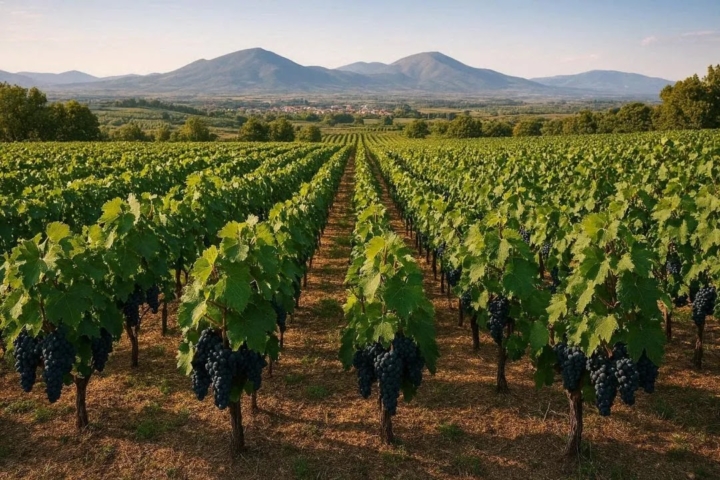
Lo Xinomavro è un vitigno autoctono della Grecia settentrionale, con una culla storica individuata in Macedonia, in particolare nelle aree di Naoussa e Amyndeon.
La sua presenza è documentata da secoli e rappresenta uno dei pilastri della viticoltura della Grecia continentale.
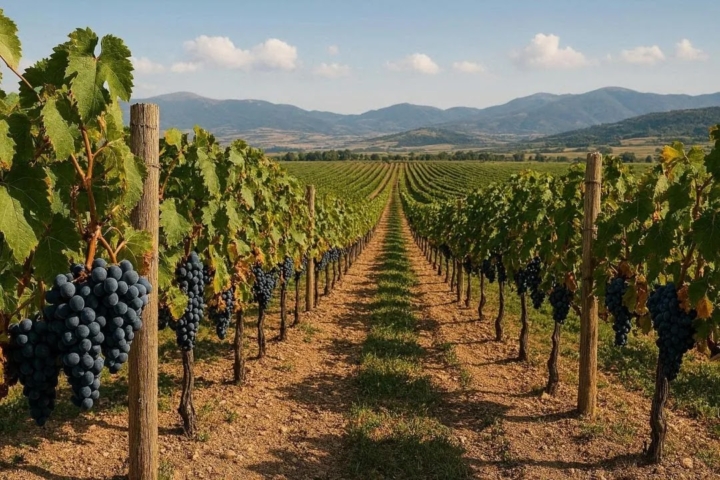
Oggi è coltivato prevalentemente nel nord del Paese, con estensioni significative anche in zone limitrofe come Goumenissa, Rapsani e nella più recente denominazione di Siatista.
Leggi anche:
Debina: l’anima verticale dell’Epiro
Caratteristiche ampelografiche
La pianta presenta vigoria medio-elevata e una produttività naturalmente abbondante, che richiede un’attenta gestione in vigna per contenere le rese.
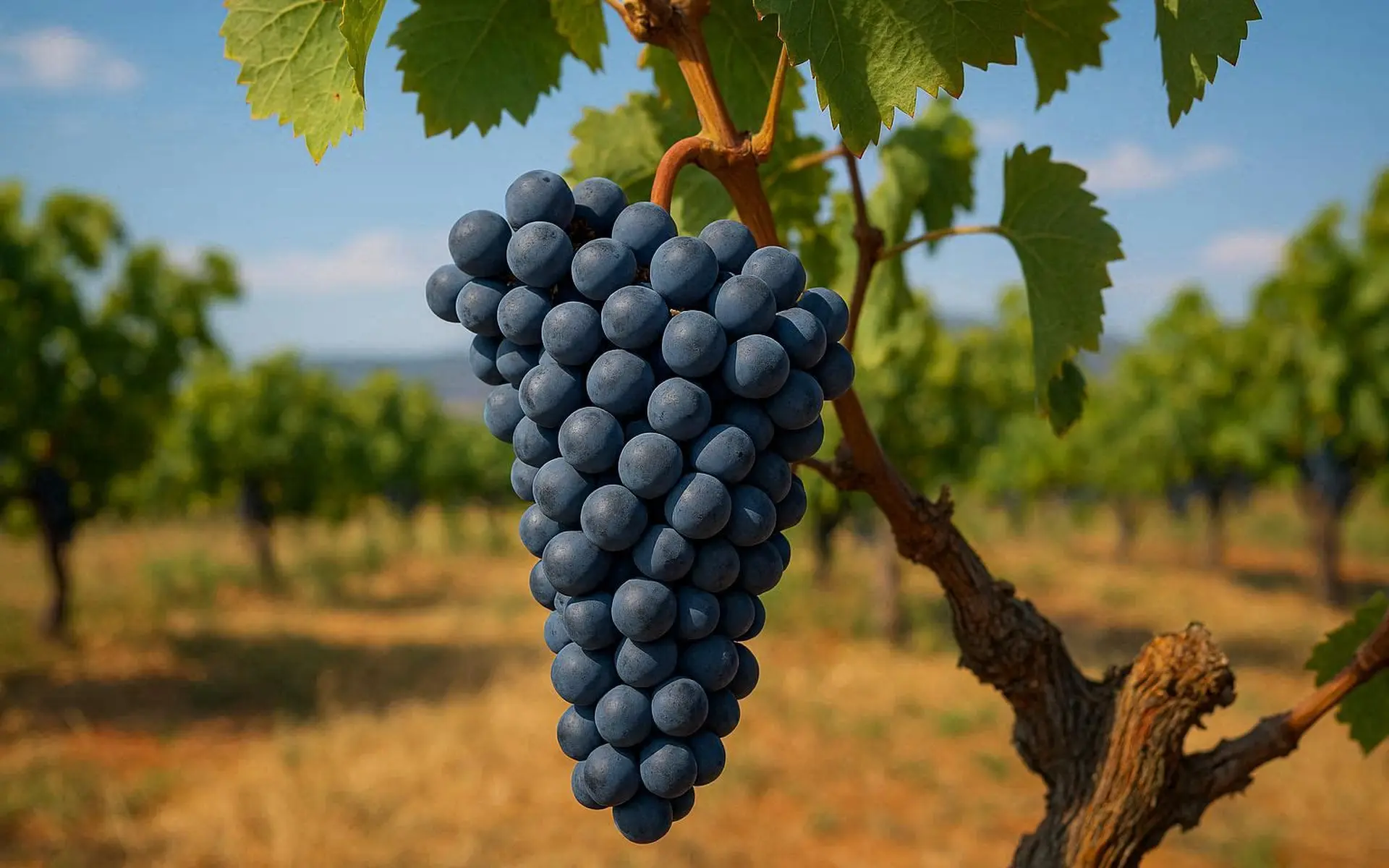
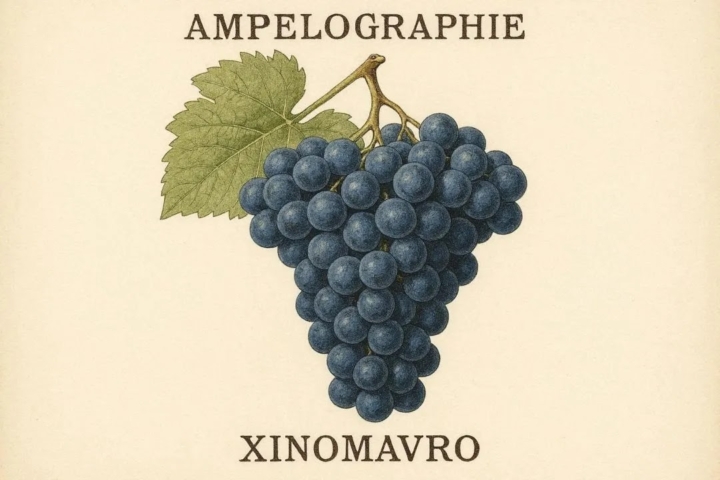
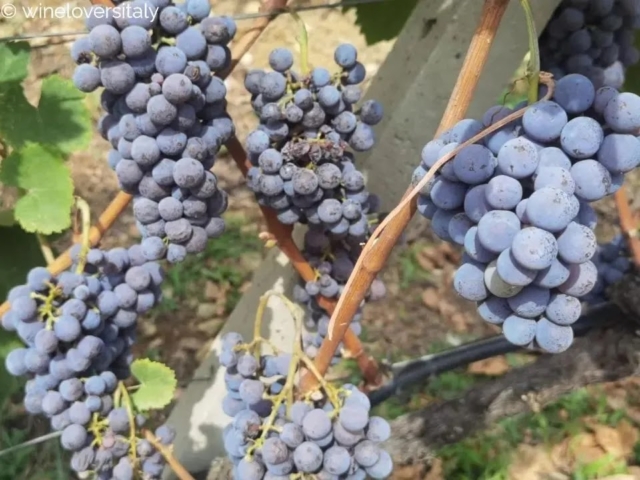
I grappoli sono medio-grandi e compatti, con acini dalla buccia sottile ma ricca di composti fenolici.
La maturazione è tardiva, aspetto che rende il vitigno particolarmente sensibile all’andamento climatico dell’annata e alle escursioni termiche di fine stagione.
Profilo enologico
Dal punto di vista enologico, lo Xinomavro è un vitigno complesso e spesso impegnativo.
I vini giovani si caratterizzano per un colore rubino scarico, talvolta trasparente, che può trarre in inganno rispetto alla struttura gustativa.
Al naso emergono note di frutti rossi acerbi, pomodoro secco, oliva nera, spezie, erbe mediterranee e, con l’evoluzione, accenni terziari di cuoio, sottobosco e tabacco.
In bocca domina una spiccata acidità, accompagnata da un tannino deciso e spesso ruvido in gioventù.
È proprio questo equilibrio tra acidità e tannino a garantire allo Xinomavro una straordinaria capacità di invecchiamento, con bottiglie che possono evolvere armoniosamente per decenni.
Territori e denominazioni
La denominazione simbolo dello Xinomavro è senza dubbio la PDO Naoussa, considerata la sua massima espressione classica.
Qui il vitigno dà origine a vini austeri, verticali e longevi, spesso paragonati per struttura e attitudine evolutiva al Nebbiolo piemontese.
Ad Amyndeon, invece, grazie a un clima più fresco e a vigneti situati ad altitudini elevate, lo Xinomavro esprime un profilo più elegante e floreale, ed è l’unica zona autorizzata anche alla produzione di versioni rosate e spumanti.
Goumenissa prevede tradizionalmente l’assemblaggio con Negoska, che ammorbidisce il tannino e arricchisce il frutto.
Stili di vinificazione
Storicamente vinificato in rosso secco, lo Xinomavro è oggi interpretato in una pluralità di stili.
Accanto alle versioni classiche, affinati a lungo in legno, si affermano interpretazioni più moderne e territoriali, con uso più misurato del rovere o vinificazioni in cemento e acciaio.
Cresce inoltre l’interesse per lo Xinomavro rosato e per le versioni spumanti metodo classico, che valorizzano la sua acidità naturale.
Potenziale e prospettive
Negli ultimi anni lo Xinomavro è diventato uno dei simboli del rinascimento del vino greco di qualità.
Produttori storici e nuove generazioni di vignaioli stanno lavorando su selezioni clonali, gestione sostenibile dei vigneti e microvinificazioni parcellari, contribuendo a ridefinire l’immagine di questo vitigno sui mercati internazionali.
La sua capacità di raccontare il territorio e di evolvere nel tempo lo rende oggi una delle uve greche più studiate e apprezzate dagli appassionati e dalla critica.
Xinomavro in breve
Origine: Grecia settentrionale (Macedonia).
Sinonimi: Popolka (localmente), Xynómavro.
Tipologia: Vitigno a bacca rossa, a maturazione tardiva.
Profilo aromatico: ciliegia acida, pomodoro secco, oliva nera, spezie, erbe mediterranee.
Caratteristiche enologiche: acidità elevata, tannino marcato, colore scarico, grande longevità.
Stile dei vini: rossi strutturati e longevi, rosati, spumanti metodo classico.
Aree di coltivazione: Naoussa (PDO), Amyndeon (PDO), Goumenissa (PDO), Rapsani, Macedonia occidentale.
Sensibilità: peronospora, botrite in annate umide; sensibile alla gestione delle rese.
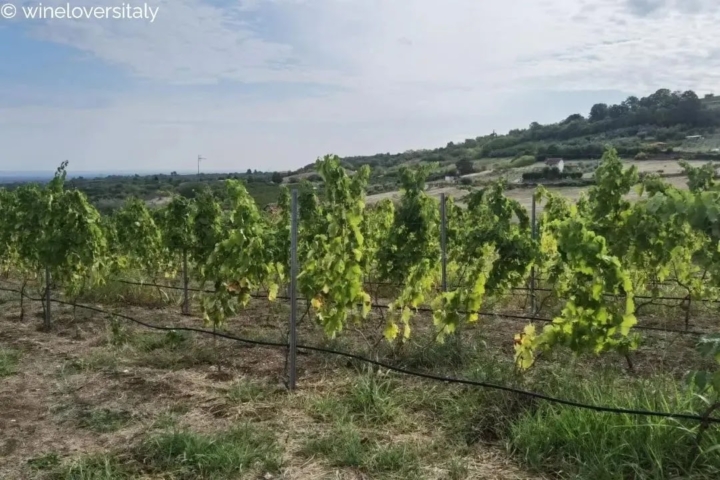
Terreni ideali: suoli calcarei e argillosi, zone collinari con buone escursioni termiche.
Xinomavro
The austere and long-lived soul of mainland Greece
Among the great red grape varieties of the Eastern Mediterranean, Xinomavro holds a central place in contemporary Greek viticulture. It is an identity-driven variety, capable of expressing its territory with precision while confidently standing alongside Europe’s great red wines in terms of structure, complexity and ageing potential. Its name, which literally means “acid and black,” already hints at the defining traits of a grape that does not seek immediacy, but depth and evolution.
Origin and distribution
Xinomavro is an indigenous grape variety from northern Greece, with its historical cradle identified in Macedonia, particularly in the areas of Naoussa and Amyndeon. Its presence has been documented for centuries, making it one of the cornerstones of mainland Greek viticulture. Today it is cultivated mainly in the northern part of the country, with significant plantings also found in nearby areas such as Goumenissa, Rapsani and the more recently recognised denomination of Siatista.
Ampelographic characteristics
The vine shows medium to high vigour and naturally generous yields, which require careful vineyard management to control production levels. The clusters are medium to large and compact, with berries that have relatively thin skins but are rich in phenolic compounds. Ripening is late, making the variety particularly sensitive to vintage conditions and to temperature variations at the end of the growing season.
Winemaking profile
From an oenological perspective, Xinomavro is a complex and often demanding grape variety. Young wines are characterised by a pale ruby colour, sometimes transparent, which can be misleading in relation to their structure on the palate. Aromatically, they reveal sour red fruits, sun-dried tomato, black olive, spices and Mediterranean herbs, while ageing brings tertiary notes of leather, forest floor and tobacco.
On the palate, high acidity dominates, supported by firm, sometimes austere tannins in youth. It is precisely this balance between acidity and tannin that gives Xinomavro its extraordinary ageing potential, with bottles capable of evolving harmoniously for decades.
Territories and appellations
The emblematic appellation for Xinomavro is undoubtedly PDO Naoussa, considered its most classical and authoritative expression. Here the variety produces austere, vertical and long-lived wines, often compared for structure and ageing ability to Piedmont’s Nebbiolo.
In Amyndeon, thanks to a cooler climate and vineyards planted at higher altitudes, Xinomavro expresses a more elegant and floral profile and is the only area authorised to produce rosé and sparkling versions. Goumenissa traditionally involves blending Xinomavro with Negoska, which softens the tannins and enhances the fruit.
Winemaking styles
Historically vinified as a dry red wine, Xinomavro is now interpreted through a wide range of styles. Alongside classic versions aged for long periods in wood, more modern and terroir-driven expressions are emerging, with restrained use of oak or vinification in concrete and stainless steel. There is also growing interest in Xinomavro rosé wines and traditional method sparkling wines, which highlight the grape’s natural acidity.
Potential and future perspectives
In recent years, Xinomavro has become one of the symbols of the Greek wine quality renaissance. Historic producers and a new generation of winemakers are working on clonal selection, sustainable vineyard practices and single-parcel microvinifications, helping to redefine the image of this grape on international markets. Its ability to convey terroir and evolve over time makes Xinomavro today one of the most studied and appreciated Greek varieties among wine lovers and critics alike.
Ξινόμαυρο
Η αυστηρή και μακρόβια ψυχή της ηπειρωτικής Ελλάδας
Ανάμεσα στις μεγάλες ερυθρές ποικιλίες της Ανατολικής Μεσογείου, το Ξινόμαυρο κατέχει κεντρική θέση στη σύγχρονη ελληνική αμπελουργία. Πρόκειται για μια ποικιλία με ισχυρή ταυτότητα, ικανή να εκφράζει με ακρίβεια τον τόπο προέλευσής της και ταυτόχρονα να στέκεται ισάξια δίπλα στα μεγάλα ευρωπαϊκά ερυθρά κρασιά ως προς τη δομή, την πολυπλοκότητα και τη δυνατότητα παλαίωσης. Το όνομά του, που σημαίνει κυριολεκτικά «ξινό και μαύρο», προϊδεάζει για τον χαρακτήρα ενός σταφυλιού που δεν επιδιώκει την αμεσότητα, αλλά το βάθος και την εξέλιξη.
Προέλευση και εξάπλωση
Το Ξινόμαυρο είναι αυτόχθονη ποικιλία της βόρειας Ελλάδας, με ιστορική κοιτίδα τη Μακεδονία και ιδιαίτερα τις περιοχές της Νάουσας και του Αμυνταίου. Η παρουσία του καταγράφεται εδώ και αιώνες και αποτελεί έναν από τους βασικούς πυλώνες της αμπελουργίας της ηπειρωτικής Ελλάδας. Σήμερα καλλιεργείται κυρίως στο βόρειο τμήμα της χώρας, με σημαντικές εκτάσεις και σε γειτονικές ζώνες όπως η Γουμένισσα, η Ραψάνη και η νεότερη ζώνη της Σιάτιστας.
Αμπελογραφικά χαρακτηριστικά
Το φυτό παρουσιάζει μέτρια έως υψηλή ζωηρότητα και φυσικά υψηλή παραγωγικότητα, γεγονός που απαιτεί προσεκτική διαχείριση στον αμπελώνα για τον έλεγχο των αποδόσεων. Τα σταφύλια είναι μεσαίου έως μεγάλου μεγέθους και συμπαγή, με ρόγες λεπτόφλουδες αλλά πλούσιες σε φαινολικές ενώσεις. Η ωρίμανση είναι όψιμη, στοιχείο που καθιστά την ποικιλία ιδιαίτερα ευαίσθητη στις κλιματικές συνθήκες της χρονιάς και στις θερμοκρασιακές διακυμάνσεις στο τέλος της καλλιεργητικής περιόδου.
Οινοποιητικό προφίλ
Από οινολογική άποψη, το Ξινόμαυρο είναι μια σύνθετη και συχνά απαιτητική ποικιλία. Τα νεαρά κρασιά χαρακτηρίζονται από ανοιχτό ρουμπινί χρώμα, συχνά διαφανές, που μπορεί να παραπλανήσει σε σχέση με τη δομή στο στόμα. Αρωματικά αναδεικνύονται νότες όξινων κόκκινων φρούτων, λιαστής ντομάτας, μαύρης ελιάς, μπαχαρικών και μεσογειακών βοτάνων, ενώ με την παλαίωση εμφανίζονται τριτογενή αρώματα δέρματος, υπορόφου και καπνού.
Στο στόμα κυριαρχεί η υψηλή οξύτητα, συνοδευόμενη από έντονες και συχνά αυστηρές τανίνες στη νεότητά του. Ακριβώς αυτή η ισορροπία μεταξύ οξύτητας και τανινών χαρίζει στο Ξινόμαυρο εξαιρετική δυνατότητα παλαίωσης, με κρασιά που μπορούν να εξελιχθούν αρμονικά για δεκαετίες.
Περιοχές και ονομασίες προέλευσης
Η εμβληματική ζώνη του Ξινόμαυρου είναι αναμφίβολα η ΠΟΠ Νάουσα, η οποία θεωρείται η πιο κλασική και αντιπροσωπευτική έκφρασή του. Εκεί η ποικιλία δίνει αυστηρά, κάθετα και μακρόβια κρασιά, τα οποία συχνά συγκρίνονται, ως προς τη δομή και τη δυνατότητα παλαίωσης, με το Nebbiolo του Πιεμόντε.
Στο Αμύνταιο, χάρη στο ψυχρότερο κλίμα και στους αμπελώνες μεγαλύτερου υψομέτρου, το Ξινόμαυρο εμφανίζει πιο κομψό και ανθικό χαρακτήρα και αποτελεί τη μοναδική ζώνη όπου επιτρέπεται και η παραγωγή ροζέ και αφρωδών οίνων. Στη Γουμένισσα, η παραδοσιακή ανάμειξη με τη Νεγκόσκα μαλακώνει τις τανίνες και ενισχύει το φρουτώδες προφίλ.
Στυλ οινοποίησης
Παραδοσιακά οινοποιημένο ως ξηρό ερυθρό κρασί, το Ξινόμαυρο σήμερα εκφράζεται μέσα από πολλαπλά στυλ. Δίπλα στις κλασικές εκδοχές με μακρά παλαίωση σε ξύλο, αναπτύσσονται πιο σύγχρονες και terroir-driven προσεγγίσεις, με περιορισμένη χρήση δρυός ή οινοποίηση σε τσιμεντένιες δεξαμενές και ανοξείδωτο χάλυβα. Παράλληλα, αυξάνεται το ενδιαφέρον για ροζέ Ξινόμαυρο και για αφρώδεις οίνους παραδοσιακής μεθόδου, που αναδεικνύουν τη φυσική του οξύτητα.
Δυναμικό και προοπτικές
Τα τελευταία χρόνια το Ξινόμαυρο έχει αναδειχθεί σε ένα από τα σύμβολα της ποιοτικής αναγέννησης του ελληνικού κρασιού. Ιστορικά οινοποιεία και μια νέα γενιά παραγωγών επενδύουν σε κλωνική επιλογή, βιώσιμες πρακτικές αμπελουργίας και μικροοινοποιήσεις αμπελοτεμαχίων, συμβάλλοντας στον επαναπροσδιορισμό της εικόνας της ποικιλίας στις διεθνείς αγορές. Η ικανότητά του να εκφράζει τον τόπο και να εξελίσσεται στον χρόνο καθιστά το Ξινόμαυρο μία από τις πιο μελετημένες και εκτιμημένες ελληνικές ποικιλίες από οινόφιλους και κριτικούς.